
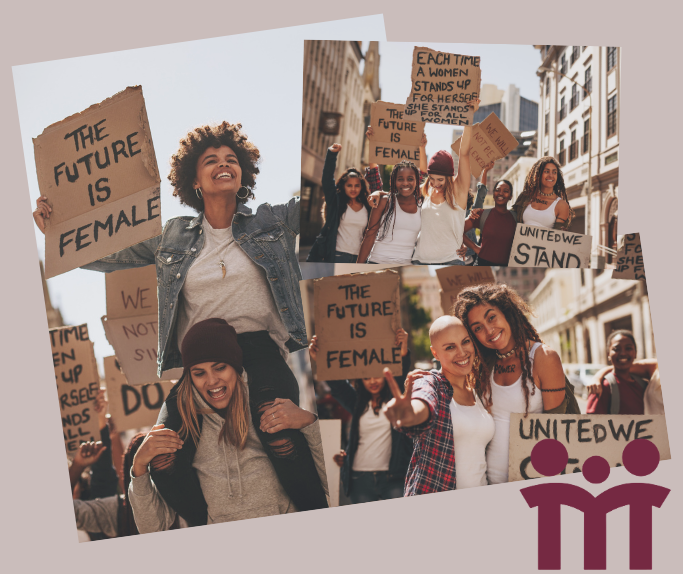
The Timeline We Inherited
For 250 years, America has told a story about freedom; a story centered on white men.
But when you look closely at our laws, our courts, and our cultural norms, a different truth emerges: most women, and especially women of color, have lived far fewer years in anything resembling freedom.
A timeline recently crossed my feed listing the years women were finally “allowed” to do basic things… vote, own property, get birth control, escape abuse, open a bank account. It was striking not just for what it included, but for what it left out.
So, let’s widen the lens.
Let’s tell the fuller story, the one that honors the women who fought, bled, organized, marched, and refused to disappear.
The Milestones We Remember and Some We Don’t
Here are some of the most defining moments in women’s rights in the United States, expanded to include Black women, Indigenous women, immigrant women, and other women historically excluded from “women’s rights” narratives.
Before 1920: Voting rights were never equal
1776–1860s: White men gain full political rights; women of all races are excluded.
1848: Seneca Falls Convention; Black and Indigenous women were present but later erased from the narrative.
1866: Black women advocate for suffrage during Reconstruction, though neither Black men nor women are protected in practice.
1887: The Dawes Act strips Indigenous women of land and sovereignty.
1920: White women gain the right to vote
1920: The 19th Amendment passes, but Jim Crow laws block Black women, Native women, Asian American women, and Latinas from voting for decades.
Voting rights for women of color
1924: Native American women become U.S. citizens, but many states still prevent them from voting.
1943: Chinese American women gain the right to naturalize and vote.
1952: Japanese and other Asian American women gain citizenship rights.
1965: The Voting Rights Act finally protects Black, Indigenous, and Latina women’s right to vote.
Economic freedom
1963: Equal Pay Act (still not fully realized).
1974: Women can open a credit card or buy a home without a male co‑signer.
1988: Women can own a business without a male guarantor.
Reproductive freedom
1960: FDA approves the pill, but unmarried women and women of color face barriers.
1972: Unmarried women gain legal access to birth control.
1973: Roe v. Wade legalizes abortion nationwide.
1978: Federal investigation reveals forced sterilization of Indigenous women continued into the 1970s.
2022: Roe overturned; reproductive rights vary dramatically by state.
Safety and bodily autonomy
1994: The Violence Against Women Act (VAWA) passes, finally recognizing domestic violence as a national crisis.
2013: Tribal courts gain authority to prosecute non‑Native perpetrators of violence against Native women.
Marriage, identity, and LGBTQ+ rights
1967: Interracial marriage legalized nationwide.
2015: Marriage equality becomes law, granting LGBTQ+ equal marriage rights.
Why This Matters
When we say, “women’s rights,” we often picture a single timeline.
But the truth is: there is no one singular timeline.
White women gained rights decades, sometimes centuries, before women of color.
Indigenous women had rights stripped and restored in cycles.
Immigrant women gained rights only when immigration laws allowed them to exist legally in this country.
LGBTQ+ women gained rights only after generations of erasure.
And yet, despite these inequities, women of color have always been at the forefront of every movement for justice; even when the victories didn’t include them.
The Work Ahead
If we want to honor the women who came before us, we must tell the truth about the uneven road they walked.
We must name the disparities, not hide them.
We must recognize that progress is not linear and that rights can be gained, restricted, and regained again.
This is the timeline we inherited.
For nearly 40 years, WRC has stood in the gap between surviving and thriving. That’s at the heart of our mission at Women’s Resource Center. We’ve been here to offer safety where systems fell short, stability where options were limited, and community where isolation once lived.
Forty years of walking beside women as they rebuild, reclaim, and rise.
And we’ll be here for another forty, because rights are still uneven, stability is still fragile, and women still deserve more than survival.